XRP's Institutional Shift: Can New Products Sustain Demand Three Years Post-Ruling?
Regulatory clarity enabled institutional integration, but capital flows remain a key indicator for XRP's future performance.
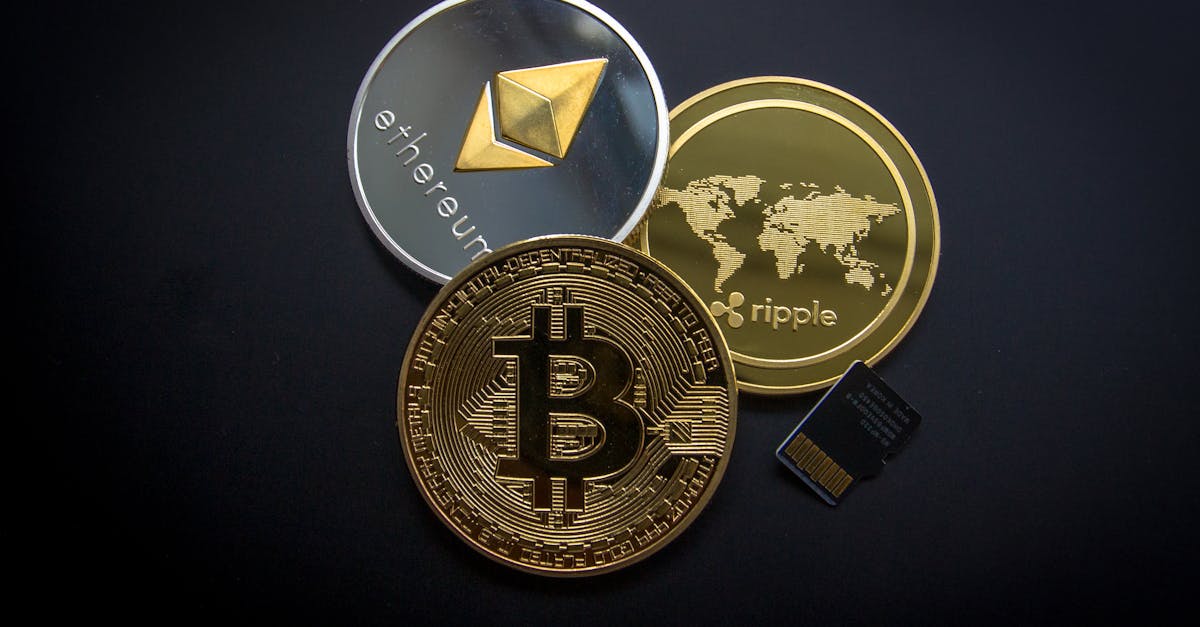
Photo by Worldspectrum on Pexels
Executive summary
Three years ago, on July 13, 2023, Judge Analisa Torres delivered a key ruling distinguishing between Ripple's programmatic sales of XRP on exchanges, which were not deemed securities, and institutional sales, which were (according to CryptoPotato). This decision provided significant regulatory clarity for the asset. The market reacted immediately, with XRP soaring over 70% in a single day, leading major US exchanges such as Coinbase, Kraken, and Gemini to relist the token (according to CryptoPotato). XRP subsequently rallied in late 2024, climbing above $3 in early 2025, and reached a new all-time high in July 2025 before settling around $1.06 on its third anniversary (according to CryptoPotato).
Following the ruling, Ripple embarked on a strategic expansion, launching its US dollar-backed stablecoin, RLUSD, in December 2024 (according to CryptoPotato). The company also pursued significant acquisitions, including Standard Custody & Trust Company in June 2024 and the $1.25 billion purchase of global prime broker Hidden Road in April 2025 (according to CryptoPotato). Partnerships with entities like Onafriq, Axelar Foundation, Clear Junction, Archax, OpenEden, BDACS, and Ctrl Alt have aimed to integrate the XRP Ledger into various financial infrastructures, including cross-border payments, RWA tokenization, and institutional custody, with BNY Mellon appointed as primary custodian for RLUSD reserves (according to CryptoPotato). The regulatory clarity also paved the way for spot XRP ETFs, which began launching in late 2025 and initially dominated crypto ETF flows, though they recently recorded a $2.50 million outflow in July (according to CryptoPotato).
Why it matters
The enduring impact of the 2023 ruling is primarily observed in the structural changes it enabled for XRP's market access and institutional perception. The regulatory clarity significantly reduced the perceived risk for institutional capital, which is a prerequisite for broader adoption. The subsequent launch of spot XRP ETFs represents a direct and regulated conduit for institutional investment, potentially facilitating substantial capital flows into the asset. While these ETFs initially saw strong inflows, the recent $2.50 million outflow in July (according to CryptoPotato) indicates that current institutional demand may be moderating or experiencing profit-taking, especially given the broader market's current 'Fear' sentiment (Fear & Greed Index: 28).
Ripple's strategic acquisitions, such as Hidden Road for $1.25 billion, aim to embed the XRP Ledger and its associated services, including RLUSD, deeper into traditional finance infrastructure. This expansion into institutional prime brokerage, clearing, and financing could indirectly increase the utility and demand for XRP as a bridge asset or for network fees. Similarly, partnerships focused on RWA tokenization and cross-border payments expand the ecosystem's functionality. However, the direct correlation between these ecosystem developments and sustained spot XRP demand requires ongoing monitoring of actual capital flows, trading volume, and on-chain utility metrics. The shift is more about establishing a compliant market structure and institutional access points than guaranteeing immediate, sustained spot demand for the XRP token itself. The market's reaction will increasingly depend on the actual adoption and capital deployment through these new channels, rather than solely on the narrative of institutional integration.
What to watch — next 72 hours
Tick off what you've already checked — saved on this device.
Bottom line
The most likely outcome for XRP in the near term is a neutral-to-slightly-bearish trajectory, with a 50% probability. The market has largely priced in the positive regulatory developments and initial institutional product launches. Recent XRP ETF outflows and broader market weakness indicate that current institutional demand is not strong enough to drive significant upside. The biggest risk to this assessment is a lack of sustained capital inflows into XRP ETFs or other institutional products. Investors should closely watch XRP ETF flow data and overall XRP trading volume as key indicators.
Tagged
Verified coin links
Matched to the highest-ranked CoinGecko listing — always double-check the contract address before trading; impostor tokens reuse real names.
Evidence & Sources
How we reached this analysis — traceable to verifiable data, not model guesswork.
- Primary source
- CryptoPotato
- Verified data
- Historical moves checked against real Coinbase price data (2 events).
- Track record
- Graded against the real market move when we still published forecasts. We stopped — see how we work now. .
- AI confidence
- 70/100 — an estimate, not a guarantee.
- Published
- Jul 13, 2026 · accuracy last checked Jul 21, 2026
For information and analysis only — not financial advice. We are an analysis platform, not a broker, financial adviser, or seller of any asset, and we never tell you to buy or sell. Our scenario probabilities are editorial estimates developed through a combination of data analysis, automated research tools, source verification, and human editorial oversight. They may be incorrect and are not investment recommendations. Crypto is high-risk and you can lose everything — always conduct your own research before making financial decisions.
More analysis
Related analysis

Bitcoin Rally Pushes Price Towards $80,000 Amid Broader Market Gains
Bitcoin is nearing $80,000 after a three-day rally, with Ethereum also showing strong performance. This surge appears driven by a mix of political developments, Treasury actions, ETF inflows, and short covering.

What Does Trump's Hyperliquid Comment Mean for US Crypto Derivatives?
Former President Trump stated that the CFTC is working to bring Hyperliquid, an offshore perpetual futures platform, into the US in a compliant manner. This comment, made during a meeting with crypto industry leaders, sparked significant market reaction, including price surges for related tokens and substantial short liquidations.

Grayscale Identifies Potential Altcoin Winners Under New US Token Rules
Grayscale has highlighted Ethereum, Solana, and BNB as altcoins that may see advantages from evolving US token regulations, particularly concerning fundraising. This analysis suggests a potential shift in regulatory clarity could revive token issuance and benefit established ecosystems.

Crypto Market Outlook — Neutral Bias Dominates Amidst Regulatory Uncertainty and Shifting Institutional Flows
The crypto market maintains a neutral stance, reflecting ongoing regulatory delays and mixed signals from institutional capital allocation. Key assets like BTC and ETH show limited directional conviction as traders await clearer catalysts.

Clarity Act Stalls: 10% Chance Before Midterms, What's the Real Impact on SOL?
The CEO of the Solana Policy Institute estimates only a 10% chance the Clarity Act passes before the November midterms, labeling its current status as 'August recess purgatory'. This assessment implies continued regulatory uncertainty for the digital asset industry, with the Solana (SOL) price currently trading at $76.9.

US Crypto Regulatory Clarity Delayed: What Does It Mean for Institutional Capital?
The CEO of the Solana Policy Institute indicates a mere 10% chance of the CLARITY Act passing before the November midterm elections, citing congressional gridlock and objections from traditional financial institutions. This assessment, corroborated by prediction markets, suggests a prolonged period of regulatory uncertainty in the US, which could continue to deter new institutional capital inflows.